


















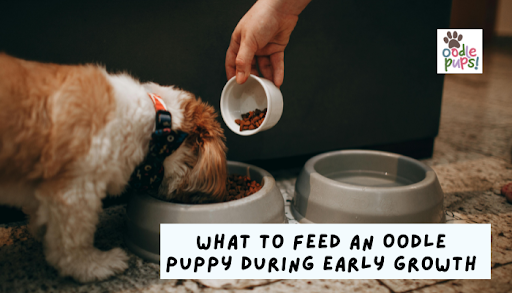
A complete and balanced puppy food gives oodle puppies the nutrients they need to grow properly. And compared to adult dogs, puppies need more protein, carefully balanced minerals, and enough calories to support the development of muscles, bones, and organs.
In fact, the food your puppy eats during this stage can affect their joint health, immune strength, and weight for years. However, with hundreds of puppy food options in Australia, the right fit for a growing oodle can feel hard to pin down.
At Oodle Pups, we breed RightPaw-verified Labradoodles in Brisbane and share these guides from our experience raising our own dogs, Pip and Rosie. So this guide will cover how to choose oodle puppy food, feeding schedules by age, and ways to support healthy development.
To start, it helps to understand what growing puppies need nutritionally.
Oodle Puppy Food and Puppy Nutrition: What Growing Puppies Need
Growing puppies need a nutrient-dense puppy diet with higher protein, healthy fats, and controlled minerals to support rapid development in the first 12 months. Here are the key nutrients worth paying attention to.
Core Nutrition Requirements
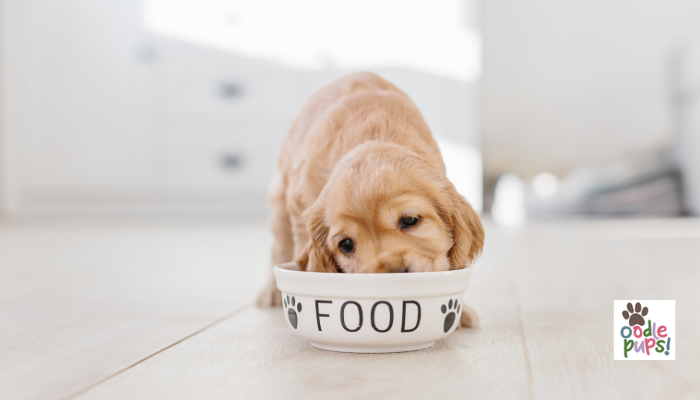
Puppies need more energy than adult dogs because their bodies are growing quickly. At the same time, they are developing bones, muscles, and brain tissue, which increases their need for nutrients.
A complete and balanced puppy food should provide high-quality protein, healthy fats, amino acids, and essential vitamins and minerals. Calcium and phosphorus also help build strong bones, while Omega-3 DHA supports healthy brain and eye development during the early months.
Puppy Nutrition Considerations
Once you understand what puppies need, the next step is knowing how to choose a food that meets those needs. Nutritional guidelines from organisations like AAFCO (the Association of American Feed Control Officials) help you check whether a dog food meets minimum standards for growth.
Most commercial puppy foods that pass feeding trials already meet these requirements and provide balanced nutrition. Because of this, quality commercial puppy foods are often a safe starting point, as they deliver the right nutrient balance that home-prepared meals can easily miss.
Comparing Puppy Food Options
Of course, even among quality options, not every puppy food is the same. Below is a quick look at what each type brings to the table:
- Dry Dog Food: Most puppy owners start here because it’s affordable, easy to store, and the kibble texture can support dental health by reducing plaque buildup over time.
- Wet Food: If your puppy is a picky eater or needs more hydration, wet food helps on both fronts. The higher moisture content also makes it easier on younger puppies still adjusting to solid meals.
- Mixed Feeding: Combining dry food and wet food can give your puppy better texture, higher moisture intake, and more variety in taste. However, you will need to watch portions more closely when two formats are in the bowl.
- Home-Cooked Food: Some owners prefer preparing meals at home, like cooking chicken, rice, and vegetables for their puppy, and it can work well with the right recipes. But homemade diets can easily miss main nutrients if you’re not careful, so we recommend veterinary guidance as a must before you go down this path.
The best approach is matching the food type to your oodle’s age and needs. That alone will get you closer to a healthy puppy diet overall.
Common Mistakes to Avoid
Even with the right food type picked out, a few common slip-ups can undo your progress. Feeding adult food too early is one of the biggest mistakes we notice. Puppies usually need puppy food until they are 12 to 18 months old because their bones and organs still require higher nutrient levels.
Lower-quality diets packed with cheap, less nutritious ingredients can also slow down healthy growth over time. On top of that, giving too many treats or human foods can disrupt their daily calorie intake and often leads to gradual weight gain.
Puppy Feeding Guide: How Much to Feed My Puppy and How Often
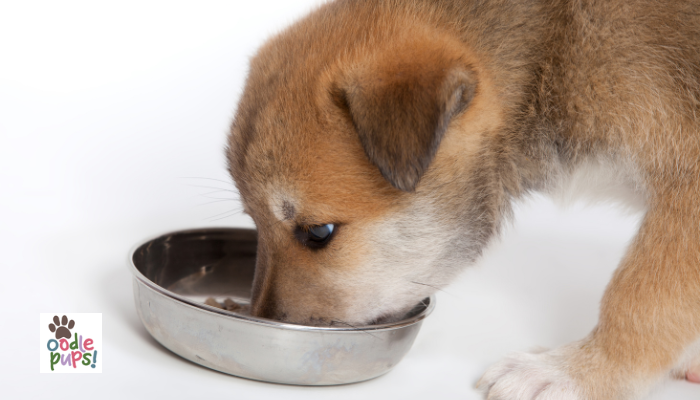
Most puppies do best on three to four frequent meals a day until around six months old, then gradually drop to two. But the exact amount depends on a few factors, so let’s break them down.
Factors That Affect Food Intake
The feeding guide on the back of the bag is a helpful starting point, but no two puppies eat the same amount. These are the main things that change how much your puppy needs:
- Breed Size: Small breeds burn through energy fast, so they need calorie-dense portions to keep up. Large and giant breeds are the opposite. You need to control their feeding needs to protect their growing bones and joints from early strain.
- Activity Levels: This one is pretty intuitive. A puppy who runs laps at the dog park will need more food than one who naps through most of the afternoon.
- Health Status: Some conditions or sensitivities, such as food allergies or digestive issues, can change how well your dog absorbs nutrients, and you might not notice the signs right away. But regular vet check-ups help you catch those gaps early.
- Body Condition: Let your oodle’s weight and body fat guide portion sizes. For example, if you can feel their ribs easily but they do not stick out, the portion is usually about right. On the other hand, if your puppy looks round or gains weight too quickly, cut the amount back a little.
When a few of these factors overlap, your puppy may need up to 50% more or fewer calories than the average feeding guide suggests. That’s why regular adjustments are more useful than locking in one fixed amount.
Puppy Feeding Guide by Age
As your puppy grows, feeding frequency changes with each stage. Here is what a typical schedule looks like at different ages:
8 to 12 Weeks
Younger puppies need four meals a day because their stomachs are still very small. Since they cannot hold much food at once, we recommend spreading meals throughout the day to keep their energy steady and support healthy growth. This regular feeding pattern also prevents low blood sugar, which smaller breeds are more prone to during this stage.
3 to 6 Months
By this stage, most puppies can handle three meals a day. Plus, rapid growth picks up here, so you’ll need to keep portions consistent. It’ll help your puppy’s body develop at a steady pace without putting extra pressure on growing bones.
6 to 12 Months
Around the six-month mark, you can start easing into two meals a day. Even so, they should stay on puppy food during this stage since their bones and organs aren’t fully developed until 12 to 18 months (depending on breed size).
Sample Cavoodle Feeding Routine
Every puppy is different, but having a rough schedule helps you stay consistent from day to day. Below is a sample routine that works well for most cavoodle puppy care situations:
| Time | Meal |
| 7:00 am | Breakfast |
| 12:00 pm | Smaller midday feed |
| 5:00 pm | Dinner |
| Optional | Evening snack if your vet recommends it |
This consistent feeding time will regulate your puppy’s metabolism and support their emotional stability throughout the day.
Build Healthy Feeding Habits for a Happy, Healthy Puppy
A good feeding routine doesn’t just fill your puppy’s bowl on time. When meals happen at the same time each day, your puppy feels more settled, and you’ll find it easier to notice any changes in appetite early on. That kind of consistency supports a healthy life from the start.
Beyond the bowl, keeping your puppy in good condition means watching for signs of excess body fat and avoiding fast weight gain through regular portion checks. And as your puppy grows, a vet visit every few months will help you track progress and adjust food amounts when needed.
If you want breed-specific feeding advice from a RightPaw-verified breeder, Oodle Pups is always available to help new puppy families get started.