























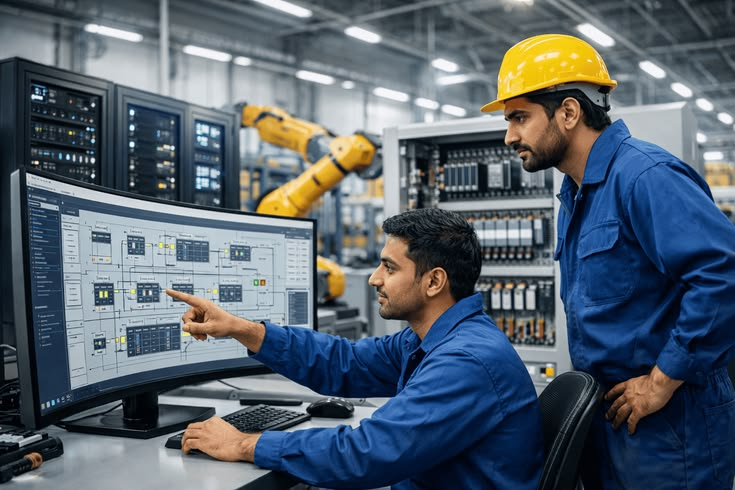
Smart manufacturing is what happens when factories use technology in a big way. Imagine using real-time data and automation to predict problems and adjust production immediately. Scalability is a big deal since it can grow up or down along with your business. You can produce more of an item or change things with no big adjustments. Smart manufacturing platforms are a solution and create state-of-the-art systems to connect operations across various levels. They help meet the ever-increasing demand for both speed and efficiency.
- Understanding Smart Manufacturing Platforms
Smart manufacturing platforms are the digital solutions of the next generation, which are able to empower production in the industry by connecting the machines, software, and human beings. These systems enable factories to operate in a more visible, interconnected and agile way. One of their chief features is how they conduct real-time monitoring and data analysis. This implies that machines can communicate with each other, materials in raw form are counted and any machine malfunction noticed which would necessitate a solution without halting the whole process. In addition, these platforms aid in the seamless flow of production and reduce downtimes. They enable industries to switch from varied legacy systems to a unified view of their production operations.
- Key Benefits for Scalable Production
Smart manufacturing platforms are all about scalability. They can enable you to produce up to 30 percent more within the same limitations. They also decline operational costs by using intelligence and machine-learning algorithms to use energy and resources efficiently. In addition, these systems constantly monitor quality, allowing early quality checks and reducing waste. Moreover, you have the decision-making process that is faster as you possess key performance indicators at your fingertips. Resource handling also gets smarter as processes, labor shifts, and stock levels get aligned properly. The automated and standardized processes allow you to adapt quickly to new orders or market changes.
- Role of Automation and Software
Automation and software are vital to smart manufacturing, and modern manufacturing plants become automatic. Such systems reduce human work by regulating the operations dealing with repetitive and error-prone tasks. System integration is a major advantage as equipment from different vendors works together as one smart factory. However, there is more to it as they also provide quality control and waste reduction by monitoring products in process automatically. It is recommended to use industrial automation software from Open Automation Software that supports the quick development of applications and further support you in automation of industrial tasks. Such automation and software combination not just speeds up the process but also lessens the number of setbacks.
- Data and Connectivity in Smart Manufacturing
Data and connectivity are vital in smart manufacturing. The Internet of Things (IoT) devices and sophisticated sensors are continuously tracking the production output, temperature, or machine wear and tear. Connection of these bits of information to a central system, such as a cloud, allows data to be stored, processed, and analyzed. When data is analyzed using soft tools, estimates of maintenance needs are produced in advance, or bottlenecks are identified before they occur. Real-time monitoring enables a factory manager to track the entire plant from anywhere on a mobile device. Cloud solutions facilitate interaction between many locations and enable access to the same information 24/7.
- Challenges and Practical Considerations
The transition to smart manufacturing is not a light task, as it is associated with a great number of real-life issues. Implementation can cost a fortune, particularly for a factory that has to replace its antiquated equipment or construct new systems. A skilled workforce is also a need as most employees will be performing new tasks and handling advanced technology and devices. Data security also becomes a risk because more networked systems are exposed to hackers and viruses. Moreover, workers can resist modifications because of fear of losing their jobs or being unable to adapt to new technology. These systems can also become messy to manage as several levels of systems and data-driven tools stack up.
Conclusion
Smart manufacturing is essential to secure the manufacturing sector’s future. It is not only technical innovation, but flexibility to adapt and use of data to make productive decisions. The companies that have embraced these technologies have cheaper costs, increased production and quality. At first sight, it might appear to be an expensive option, but over time, it will pay in terms of better productivity and reduced wastage. Moreover, one does not need to do the whole implementation in a single night; a step-by-step planned implementation will assist in preventing mistakes and make the implementation simple.