






















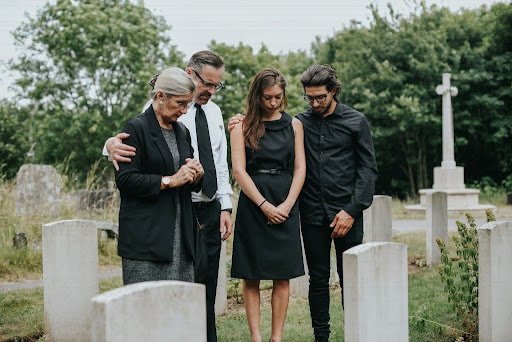
The funeral industry has been one of the more resistant sectors to cultural change. The format of the traditional funeral, the viewing, the chapel service, the procession, the burial or committal, has remained largely intact across generations in ways that most other social rituals haven’t. Weddings have changed almost beyond recognition over the past fifty years. Coming of age ceremonies have diversified. The ways people mark births, retirements, and milestones of almost every kind have become more varied, more personalised, and more reflective of individual values. Funerals, largely, stayed the same.
That’s changing. The shift isn’t uniform across every community or every culture, and it isn’t happening overnight, but it’s visible enough in the choices families are making and in the services funeral providers are developing to meet those choices that it represents something more than a marginal trend. Understanding what’s driving it requires looking at more than the obvious economic explanation, because the move toward simpler funerals is happening across a wide enough range of families, circumstances, and motivations that price alone doesn’t account for it.
The Traditional Funeral Model and Where It Started Showing Cracks
The conventional funeral format became the default not through deliberate design but through accumulation. The practices that now constitute a traditional funeral developed across centuries of religious, cultural, and practical influences that made sense in specific historical contexts and persisted through inertia as those contexts changed around them.
The chapel viewing, for example, developed in part because of the practical necessity of giving extended family and community time to travel before the service took place. The formal procession reflected the social importance of public acknowledgement of death in communities where everyone knew the deceased and the visible ceremony served a collective function. The involvement of professional funeral providers expanded as urbanisation reduced the community-based care of the dead that had previously been managed within families and local religious institutions.
What began to expose the limitations of this model was a combination of factors that didn’t arrive simultaneously but whose cumulative effect has been significant. The cost of traditional funerals has increased substantially across most Western markets, with average funeral costs in Australia, the UK, and the United States all sitting at levels that represent a significant financial burden for many families. The religious and community structures that gave conventional funeral formats their meaning have weakened for many people, leaving a ceremony whose form persists beyond the context that generated it. And the increasing diversity of families and communities means that a single inherited format serves the full range of circumstances considerably less well than it once did.
What Families Are Actually Choosing Instead
The alternative that has grown most significantly is direct cremation, a no-service, no-attendance process that handles the legal and practical requirements of death without a formal ceremony at the time of cremation. The ashes are returned to the family, who can then choose to hold a memorial in their own time, their own location, and whatever format reflects the person and the people who loved them.
The profile of families choosing direct cremation without a service is broader than the common assumption that it’s primarily chosen by those with financial constraints. It includes families following the explicit wishes of a deceased who expressed a preference for simplicity. It includes people who have lost someone without a large social network for whom a formal funeral would feel performative rather than meaningful. It includes families who are geographically dispersed and for whom the compressed timeframe of a traditional funeral makes gathering practically difficult. And it includes people whose values around environmental impact, anti-consumerism, or simple preference for the informal over the formal have led them to a considered rejection of convention rather than a compromise with necessity.
What all of these families share is that the choice of a simpler format isn’t a reduction in how much they care about the person who has died. It’s a different expression of that care, one that prioritises the meaning of commemoration over the form of it.
The Separation of Farewell From Formality
One of the more interesting dimensions of the shift toward simpler funerals is what it reveals about the relationship between the practical requirements of death and the commemorative ceremony that follows. The traditional funeral model bundles these together: the legal processes, the care of the deceased, and the farewell ceremony all happen within a compressed timeframe and a defined format. The separation that direct cremation enables, where the practical process happens without attendance and the memorial is planned separately, allows families to approach commemoration differently.
A memorial planned after the direct cremation has taken place can happen in a garden, on a beach, in a pub, in a living room, or in a park that meant something to the person. It can happen a week after the death or three months later when the acute grief has settled enough for people to gather and celebrate rather than simply endure. It can include exactly the people who mattered to the deceased and nobody else. It can involve music that was actually listened to rather than music that seemed appropriate for a chapel. It can be an hour or a whole day.
The families who describe these memorials consistently talk about them as more genuinely representative of the person than a conventional funeral would have been, not because informality is inherently better than formality, but because the freedom to design something specific to this person and these relationships produces something more resonant than fitting the person into a pre-existing format.
What the Shift Tells Us About Changing Attitudes
The move toward simpler funerals isn’t just a story about the funeral industry responding to economic pressure or declining religious observance. It’s a story about a broader shift in how people relate to death and what they believe a meaningful farewell requires.
The generation now making funeral decisions for ageing parents grew up with a considerably more open relationship to conversations about death than previous generations had. Death cafes, end-of-life planning resources, and a growing body of cultural content around dying well have made explicit conversations about funeral preferences more common than they were a generation ago. People who have talked about what they want at the end of their life are more likely to have expressed specific preferences, and those preferences are increasingly tending toward something personal over something conventional.
The environmental dimension is also a genuine driver for a meaningful proportion of the families choosing simpler options. A direct cremation has a lower environmental impact than a full funeral service, and for families where that consideration matters, it aligns the farewell with values the person held in life. The growth of eco memorial options, including forest memorials and sea farewells, reflects the same underlying shift toward ceremonies that feel coherent with how the person lived rather than simply following inherited convention.
What the trend suggests about future generations is that the inherited format of the traditional funeral will continue to serve the families for whom it’s genuinely meaningful, while the space for alternatives will continue to expand as those alternatives become more familiar, more accessible, and more culturally normalised. The question of what constitutes a good farewell is being answered differently by different families, and the industry is, gradually, catching up to the diversity of those answers.