























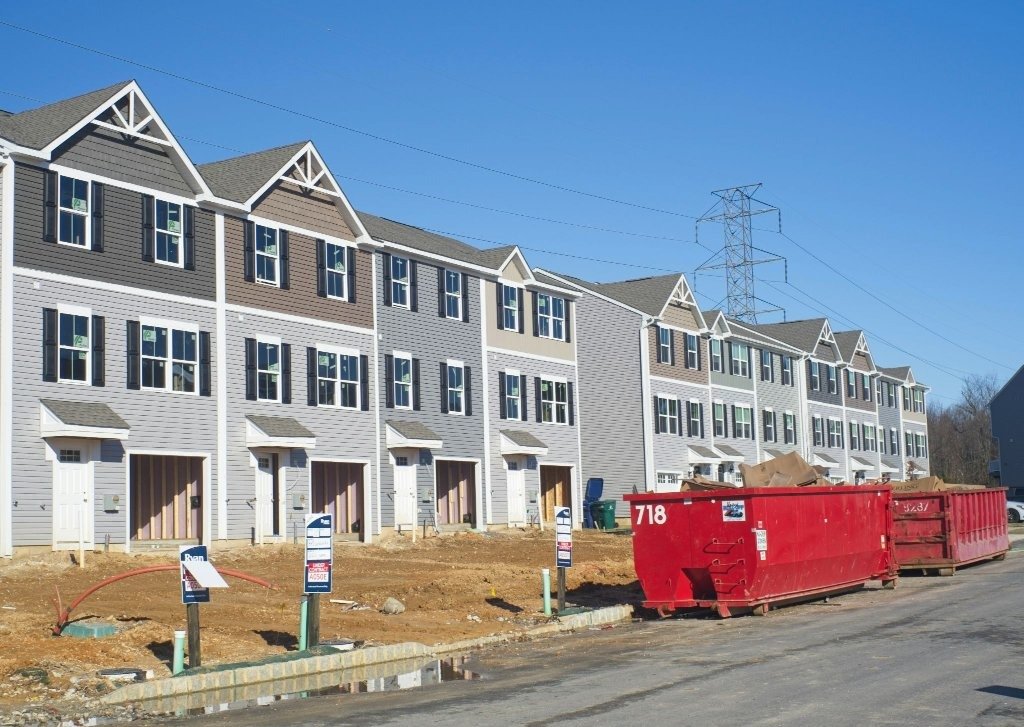
Construction projects that fall behind schedule almost always have multiple contributing factors, and waste management rarely appears on the post-project review as the primary cause. But it appears consistently as a contributing one. The trade that couldn’t start because the area where they needed to work was occupied by debris from the previous trade. The delay while a full bin was collected and a replacement arranged. The safety incident investigation that paused work for a day because accumulated waste had created a hazard that nobody had specifically addressed.
Waste management on a construction site is one of those variables that’s invisible when it’s working and conspicuous when it isn’t, and the sites where it works consistently are almost always the ones where it was planned before the project started rather than managed reactively as the waste accumulated.
The Nature of Construction Waste and Why It Demands a Different Approach
Construction and demolition waste is different from residential rubbish in ways that make residential waste management solutions inadequate for active building sites regardless of project scale.
The volume is the most immediately obvious difference. A residential renovation generates waste across days or weeks at a pace that a household bin system can theoretically manage, however imperfectly. An active construction site generates waste continuously across the full working day, in quantities that accumulate faster than any non-purpose-built system can handle. The demolition phase of a medium-sized renovation can fill a large skip bin in a single day of efficient work, and a multi-trade construction project at peak activity generates waste from multiple work streams simultaneously.
The weight density of construction materials creates a different set of constraints from residential waste. Concrete, bricks, tiles, and structural materials are dense enough that weight limits are reached significantly before volume limits on bins not specified for heavy materials. A skip bin loaded with concrete fills its weight capacity at perhaps a third of its volume, which creates planning requirements around material separation and bin specification that residential waste disposal doesn’t involve.
The material diversity of a construction site, where timber, metal, plasterboard, concrete, tiles, bricks, packaging, and general site rubbish are all being generated simultaneously, creates both sorting requirements and compliance considerations that a single undifferentiated waste stream doesn’t address adequately. Different materials have different disposal requirements, different processing pathways, and in some cases different regulatory obligations, and a waste management approach that treats everything as equivalent produces both compliance exposure and higher processing costs than one that accounts for material differences.
How Unmanaged Waste Slows a Site Down
The productivity impact of unmanaged waste on a construction site operates through several specific mechanisms that compound when they occur simultaneously, which on poorly managed sites they frequently do.
Occupied working areas are the most direct productivity cost. A trade that arrives to work in a space that’s occupied by waste from the previous trade either has to move the waste themselves, wait for it to be moved, or work around it in a way that reduces both the quality and the efficiency of their work. None of these outcomes serves the project timeline, and the cumulative effect of this friction across multiple trades and multiple days is a project that runs behind schedule for reasons that never get attributed to waste management but that waste management created.
Trade sequencing is the related problem. Construction projects are sequenced so that each trade’s work creates the conditions for the next trade to begin. When waste from one phase occupies the area where the next phase needs to work, the sequence breaks down. The plumber can’t start until the demolition waste is cleared. The plasterer can’t access the wall until the plumber’s off-cuts and packaging are removed. Each delay at a trade boundary adds to the total project duration in ways that are rarely recovered once the sequence has been disrupted.
Safety is the compliance dimension of waste accumulation that creates the most acute site management problems. Construction waste in walkways, access routes, and working areas creates trip and fall hazards that are both a genuine risk to the people on site and a regulatory obligation for the principal contractor. A site inspection that identifies accumulated waste as a safety hazard produces a requirement to address it immediately, which pauses work regardless of where the project is in its schedule.
For builders across Sydney managing active construction sites where these problems are familiar, builders waste skip bins with reliable same-day delivery, flexible changeover scheduling, and the capacity range to handle both light mixed waste and heavy demolition materials in appropriately specified bins address the waste management requirements that keep sites clear without requiring the project management overhead of coordinating multiple waste disposal arrangements simultaneously.
What Good Waste Management Looks Like on an Active Site
The waste management approach that keeps a construction site productive is characterised by three qualities: it’s planned before the project starts, it’s scaled to the actual waste generation rate rather than an optimistic estimate, and it’s structured to keep waste moving off the site rather than accumulating within it.
Planning before the project starts means the bin is in place before demolition begins rather than after the first day’s worth of debris has accumulated on the site floor. It means the bin size and type have been matched to the heaviest and highest-volume waste the project will generate rather than to the lightest and most convenient. And it means the material separation requirements for concrete, soil, and asbestos have been identified and the relevant specialist bins arranged before those materials are encountered during work.
Scaling to the actual waste generation rate requires honest assessment of how much waste each phase of the project will generate and whether the bin capacity in place can handle that volume across the phase duration without requiring the site to stop while a full bin is collected and a replacement delivered. A changeover schedule that anticipates when bins will fill, and arrangements for replacement bins that don’t require the site to wait, keeps the waste flow continuous rather than creating the periodic stoppages that undersized or unscheduled waste capacity produces.
Keeping waste moving means the bin is loaded progressively as waste is generated rather than accumulated in a staging area and loaded periodically. Each time waste is handled twice, from generation point to staging area and then from staging area to bin, the labour cost is doubled and the site is cluttered for longer than it needs to be. A bin positioned to allow direct loading from the work area eliminates the staging step and keeps the workspace clear continuously rather than periodically.
Material separation is the final element of good site waste management and the one with the most direct financial implication. Concrete, soil, and asbestos all require separate bins with different specifications and different pricing from general mixed construction waste. A site that combines these materials into a single general waste bin produces overweight charges, compliance problems, and potentially rejected loads at the processing facility, all of which create costs and delays that a correctly specified and separated waste stream avoids.
Why This Belongs in the Project Plan, Not the Problem Log
The construction project that treats waste management as a planning input rather than a reactive problem operates differently from one that addresses waste when it becomes an issue, and the difference is visible in how the project runs rather than in any single dramatic incident.
The site that has adequate, correctly specified waste capacity from day one is a site where trades arrive to clear spaces and work without interruption from accumulated debris. The project that anticipated its waste generation rate and scheduled bin changeovers accordingly is a project that doesn’t lose hours waiting on waste collection while trades stand by. The principal contractor who managed material separation from the outset is the one who doesn’t receive unexpected charges at the end of the project for mixed loads that required additional processing.
None of this is sophisticated project management. It’s the application of the same forward planning that effective construction management applies to every other variable on site, extended to waste in the same way it’s extended to materials, trades, and timeline. The waste that was managed well doesn’t appear in the project review as a problem. It doesn’t appear at all, which is exactly where it belongs.