























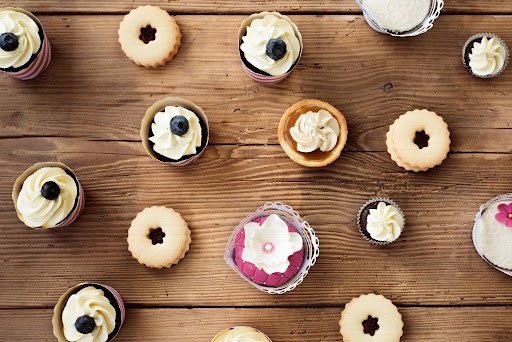
There’s a specific disappointment that comes from biting into a cupcake that looked exceptional and tasting something that didn’t match the promise of its appearance. The swirl of buttercream was perfect. The decoration was intricate and clearly skilled. The colour was exactly right. And then the cake itself was dry, or the buttercream was too sweet in a way that felt chemical rather than rich, or the whole thing had the slightly stale quality of something that was made several days ago and has been sitting in a display case ever since.
This gap between how cupcakes look and how they taste has widened as the visual expectations around celebration baking have increased. Social media has raised the aesthetic bar significantly. The technical skill involved in producing a beautifully decorated cupcake has become more widely distributed, taught through online tutorials and professional courses that didn’t exist a generation ago. But aesthetic skill and culinary quality are not the same thing, and the cupcake that genuinely delivers on both is considerably less common than the one that delivers primarily on the visual.
What Mass Production Does to a Cupcake
The economics of large-scale bakery production create specific pressures on a cupcake that are worth understanding because they explain most of the gap between appearance and taste in the products that reach most consumers.
Freshness is the first casualty. A cupcake produced at scale needs to survive a supply chain that involves production at a central facility, distribution to retail locations, and a shelf life that accommodates the gap between when it was made and when it will be purchased and eaten. The ingredients and production methods used in this context are chosen partly for their ability to maintain acceptable quality across this timeline, which is a fundamentally different objective from producing something that tastes exceptional on the day it was made.
Ingredient substitution follows from the same economic pressure. Real butter is more expensive than vegetable shortening, and the difference in cost per unit across millions of units is significant. The same applies to vanilla extract versus artificial vanilla flavouring, to fresh eggs versus processed egg products, and to the other ingredient choices that accumulate into the difference between a cupcake that tastes genuinely good and one that tastes like a commercially produced version of something that was once genuinely good.
The buttercream is where this most often becomes obvious. A buttercream made from real butter, icing sugar, and quality flavouring has a particular richness and texture that is immediately distinguishable from one made from vegetable shortening and artificial flavouring. The shortening-based version is more stable, handles temperature variation better, pipes more consistently, and photographs beautifully. It also tastes like shortening with sugar, which is a significantly different experience from the real thing.
What Fresh Actually Means in a Bakery Context
Freshness is the word most bakeries use in their marketing and one of the least consistently delivered qualities in the products that reach consumers. Understanding what it actually means in a genuine baking context is useful for distinguishing between bakeries that bake fresh and those that use the word to describe something else.
Baking fresh means the product was made on the day it will be consumed or delivered, using ingredients mixed and prepared in the bakery rather than pre-mixed batters assembled from a commercial base. It means the buttercream was made that morning rather than piped from a commercial supply. It means the decoration was applied to a cake that hadn’t been sitting in a display case for three days, which is relevant because the texture of both the cake and the icing changes across that period in ways that are perceptible when eating.
The difference between a cupcake made that morning and one made four days ago is most apparent in the texture of the cake itself. A fresh vanilla butter cake has a particular softness and moisture that reflects the state of the butter and eggs at the time of baking. This quality degrades across time, and while the degradation can be slowed by refrigeration, refrigeration itself affects the texture of both the cake and the buttercream in ways that eating cold or recently refrigerated baked goods makes immediately apparent.
The Cupcake Room, which has been baking fresh daily from its Leichhardt store in Sydney since 2008, represents what this commitment looks like in practice across a sustained period. A bakery that has maintained a daily baking standard across more than fifteen years has built its operations, its staffing, and its product range entirely around the freshness requirement rather than treating it as an aspiration that’s occasionally achieved.
The Details That Separate Good From Exceptional
Beyond freshness and ingredient quality, the craft decisions that separate a genuinely exceptional cupcake from a competent one are visible in specific details that reward attention.
The crumb structure of the cake itself is where the quality of the batter and the precision of the baking process are most directly expressed. A well-made vanilla butter cake has a fine, even crumb that holds moisture without being dense, with a texture that’s soft enough to yield easily but structured enough to support the buttercream without collapsing. This is not an accident of recipe, it’s the result of precise measurement, proper creaming of butter and sugar, careful egg incorporation, and accurate temperature and timing in the oven. Any of these done imprecisely produces a different result.
The buttercream is the element that most people evaluate first because it’s the most visually prominent part of the cupcake, but it’s also the element that most immediately communicates quality on the first taste. Real butter buttercream has a flavour that deepens slightly after it’s been in the mouth for a moment, with a richness that synthetic alternatives don’t replicate. It also has a texture that melts differently, that doesn’t leave the slightly waxy residue that a shortening-based buttercream does, and that behaves more naturally at room temperature.
Decoration skill is where the aesthetic and the culinary intersect most directly. A decoration applied to a fresh, quality cupcake using materials that are themselves of good quality, real chocolate for ganache drizzles, quality food colouring, properly made fondant for figures and details, produces a result that looks and tastes exceptional. The same decoration applied to a mediocre base is a visual achievement that doesn’t survive the first bite.
The packaging and transport consideration is the final detail that separates bakeries that understand the full product experience from those that focus only on production. A cupcake that looks perfect in the bakery and arrives damaged, dried out, or compromised by poor packaging hasn’t delivered its promise regardless of how well it was made. The box, the insert that keeps individual cupcakes stable, and the transport conditions all contribute to whether what was made in the bakery is what the recipient experiences.
Why This Matters More Than It Used to
The proliferation of beautiful cupcake imagery has created a consumer expectation around appearance that the majority of commercially produced cupcakes meet reasonably well. What hasn’t kept pace is the expectation around taste, partly because taste is harder to communicate in a photograph and partly because the economics of scale make genuine quality difficult to maintain across high volume production.
The bakeries that consistently produce cupcakes that taste as good as they look are almost always those that have made specific choices about scale, ingredients, and process that prioritise the eating experience over the efficiencies that larger operations depend on. They bake in smaller batches. They use better ingredients. They don’t compromise freshness for shelf life. And they treat the product as something that needs to deliver on both its visual promise and its culinary one, because a beautiful cupcake that disappoints on the first bite hasn’t actually achieved what a genuinely good cupcake is supposed to do.